
Showing posts with label Android. Show all posts
Showing posts with label Android. Show all posts
Tuesday, 14 April 2015
Tuesday, 14 April 2015
- 0 Comments

Whatsapp finally updated to Material Design and it now looks whole lot better than the last version.
WhatsApp version 2.12.38 now features a deep green title bar that blends into the three tabs for calls, chats and contacts. You’ll notice new buttons in the chat window to record voice messages, as well as in the attachment option pop-up.

Chat and share location WhatsApp for Android gets a much needed Material Design makeover, bringing cleaner layouts and new icons
The media selection screen for sharing photos and video, as well as the Settings menu now look clean and bright.

Group chat info and profiles now look a lot nicer, with a clean layout and a large cover image that shrinks to a titlebar with the dominant color from said image.
Profile and image sharing WhatsApp for Android gets a much needed Material Design makeover, bringing cleaner layouts and new icons
Still, the improved layouts and neater iconography are a breath of fresh air. If you want to see what the Material Design update looks like right now, grab the latest version from WhatsApp’s site.
Thursday, 5 June 2014
Thursday, 5 June 2014
- 0 Comments


The prototype tablet has a 1080p display and runs a stock version of Android 4.4 KitKat, but what's most important is the oomph under the hood: NVIDIA's quad-core Tegra K1 chip alongside 4GB of RAM and 128GB internal storage (microSD cards are not supported). That's in addition to USB 3.0, micro-HDMI, Bluetooth LE and LTE (availability will depend on carrier, but Google isn't announcing which frequencies are supported just yet) -- and if that all sounds like overkill for a tablet, it's because the team wanted to make it extremely difficult to hit a ceiling in terms of computing power.
The Tango tablet sees the world through the two cameras and a depth sensor on the back. One camera has a 4MP sensor and comes with (relatively) huge two-micron pixels that offer high light sensitivity and faster speeds than most standard options (similar to the UltraPixel sensor in HTC's One), while the other camera tracks motion more broadly with a 170-degree wide-angle fisheye lens.
If that all sounds like overkill for a tablet, it's because the team wanted to make it extremely difficult to hit a ceiling in terms of computing power.
The smartphone is a bit chunky and unsightly, from an industrial design standpoint, but the tablet actually looks like it could pass as a consumer device. It's neither as thick as I expected, nor does it appear hastily put together. Even though device aesthetics don't really matter in a tablet aimed squarely at developers, the ATAP team has put a lot of effort into the design to ensure its slate is best equipped to do its job. For example, the cameras are mounted at a 13-degree angle to give them the view needed to gather accurate data, while allowing any meatbag holding it to do so in a natural way -- instead of awkwardly holding the tablet directly in front of their faces when mapping a room.
Through Tango, the ATAP team wants to give mobile devices a sense of human scale and an understanding of space and motion -- it wants your phone or tablet to mimic the way we see the world. Should Tango succeed, the phone in your pocket will be able to map out a three-dimensional mockup of your office building or home, as well as measure the distance between objects within them (walls, counters, couches and so on).
The NVIDIA chip inside uses desktop GPU architecture, making it easier for companies to port over complex programs that they've already spent years developing on PCs.
The benefits of these spatial talents are broader than you'd think. If you're wandering aimlessly through a Home Depot to find a small trinket, you could install an app that guides you through the store, like an indoor version of in-car GPS. Or, instead of imagining how that Swedish sofa would look in your living room, another app might deftly show you if the furniture will fit where you want it to go, no tape measures or imagination required. Virtual real estate tours could become much more realistic for buyers, while three-dimensional maps would be especially handy for visually impaired users. "If you walk around the office building, [a device with Tango tech] could read the names of each conference room out loud as you pass them," says Johnny Lee, Tango's technical program lead.
The project's already getting plenty of support from the graphics community, with renowned game engine builders Unity and Epic among the many companies working with Tango; even Autodesk (the makers of AutoCAD) has several projects in the works. That corporate support, which began with Qualcomm's Adreno GPU inside the Tango smartphone, should continue to grow stronger on the tablet because of the K1 chip involved. The NVIDIA chip uses desktop GPU architecture, making it easier for companies to port over complex programs that they've already spent years developing on PCs.
"If the device can understand your environment, you could turn your living room into a dungeon."
Then there are games: Lee showed us an impressive game demo that let us explore a fantasy world by walking around in real space, making the tablet a virtual window into a completely different place or time. "If the device can understand your environment," said Lee, "you could turn your living room into a dungeon." This type of environment also seems ripe for a good game of virtual hide-and-seek, with characters hiding behind real objects in your house.
This 3D mapping technology is still considered bleeding-edge, but Lee envisions a day in which the enhanced sensing capabilities are expected in a device, much like Bluetooth is a fundamental feature in phones today. To get Project Tango where it is today, ATAP collaborated with a number of manufacturers and component suppliers to produce the necessary hardware, while universities and research labs contributed much of the software. Work in the 3D mapping space has been ongoing for the last twenty years, but the challenge Tango tackles is condensing all that technology into a small enough device that consumers will want to carry around.
We've outlined a few examples of what Tango could bring to the table, but none of it would be possible without the creative input of developers. Back in March, the team distributed 200 phones to third-party devs, but in the next six months Lee plans to ship out these high-powered tablets on a far wider scale; beginning today, developers can sign up to get notified when they're available. The tablet's expected to go on pre-order later this month, but Google is hesitant to lock down a specific date for release. Whenever it shows up, however, it'll cost $1,024 to get your hands on one -- if you get whitelisted for an invite. (Like Google Glass before it, there are criteria one must meet to be deemed worthy.) Regardless, the team hopes to showcase the device at I/O if it's ready.
Like Google's continued experiment in wearable computing, this isn't a consumer product yet. The tablet's loaded with top of the line components throughout to give devs what they need, while retaining a realistic price tag. For their money, developers won't be getting capabilities different from the phone released in Feburary, but the larger form factor does provide an upgrade in ergonomics. According to Lee, when holding the slate you're less likely to block the cameras with your fingers. Plus, a bigger device can house a much larger battery (ATAP isn't giving an official size yet, but it's likely quite generous, if the phone was any indication). More space between the cameras and sensors also allows for more accurate 3D measurements, and there's more room for heat to dissipate, which means these bigger devices can handle more computing power.
Eighteen months into the 24-month project, Lee and his team see a bright future, but Tango's ambitions don't stop with phones and tablets; the Program Lead believes that Tango could eventually extend to wearables as well. "[Tango] is a camera-based system ... and in a wearable we can explore [always-on] cameras that constantly track positions everywhere."
Source: Engadget

 |


Android 4.4.3 will soon be available for the Nexus 5.
The rollout of Google's Android 4.4.3 is under way and, as usual, the first handsets to receive the OS updates are Nexus, Motorola, and Google Play Edition devices.
The full-blown rollout of 4.4.3 follows an announcement by T-Mobile earlier this week that it would release the update to the Nexus 5 and Nexus 7 on 2 June, and that the latest Android version would bring security enhancements and bug fixes for the devices. Fortunately, now there's a good deal more information about what the update includes than T-Mobile offered in its sparse notes.
The imminent arrival of Android 4.4.3 was flagged up earlier this week when Google released it as a factory image (for unlocked Nexus devices) and on the Android Open Source Project — the build that third party ROMs such as CyanogenMod based their firmware on.
Motorola kicked off its Android 4.4.3 rollout on Tuesday for Moto X, Moto G and Moto E users. Sadly, for international consumers, the update for the Moto X is only scheduled for the operator's US customers. Device owners on other US carriers will also have to wait.
Moto G owners in the US who bought the device online and those in Brazil who bought it at retail can also expect the update this week. Consumers with the recently released low-end Moto E can also expect the update this week too.
"This latest software update brings an improved dialler with a new interface and new colours to enhance consistency and usability, as well as several stability, framework, security fixes, and enhancements to the power profile capabilities," said Steve Horowitz, Motorola Mobile's SVP of software engineering.
Improvements to the Moto X's camera come in the form of a more consistent exposure, more realistic flash colouring, and better low light handling for the front camera, according to Horowitz.
Meanwhile, Moto X and Moto G owners will also get a new app called Motorola Alert, which sends periodic messages to the contacts they choose. The Moto E only gets stability and security improvements and the updated phone dialler.
The other category of Android device that get a fast-track release are Google Play Edition (GPE) smartphones. According to Android Police, the GPE versions of the HTC One M7, the Galaxy S4, HTC One M8 and the Sony Z Ultra started receiving an 4.4.3 in an over the air update on Tuesday evening.
Meanwhile, Sprint subscribers with the Nexus 5 should also be getting the update from this week, with the rollout occurring in batches until 9 June.
Anyone interested in digging through the entire Android 4.4.3 changelog can trawl through the list of 7,454 changes in the OS compared with Android 4.4.2 compiled by FunkyAndroid this week. As noted by Android Police, some of the standout fixes include losing Bluetooth functionality from overexposure to Bluetooth Low Energy devices and bad VPN routing.
One issue that might not have been fixed is a battery drain problem plaguing Nexus 5 owners that surfaced this March. According to one user on XDA-forums, the "mm-qcamera-daemon" bug is still there and consuming battery. The update also did not fix a problem with LED Notifications for missed calls, while some users are experiencing poor network strength.
Friday, 18 April 2014
Friday, 18 April 2014
- 0 Comments

Many developers got Google glass for beta testing and most of them are unable to pull apk files from it. so we have created a brief guide on How to Pull apk files from your Google Glass .
Note : This method also works for other devices .
Things you will need :
1. Google Glass.
2. PC.
3. Android SDK installed ( if not then go here )
OR
4. Download ADB.zip from below and unzip it .
Required Downloads :
1. ADB
Steps to pull .apk files :
1. If you have Android SDK installed then go to the folder name Platform-tools inside it.
2. Open command window there using Shift + Right mouse click and select Open command window here option.
3. Extract package file first using command given below :
adb[space]pull[space] /data/system/packages.xml
[space]{Location on pc where you want to copy file}
Example: adb pull /data/system/packages.xml C://SuperDevs Team
4. Get File registry name starts from com. or in. which you want to pull.
5. Extraction of apk :
adb[space]pull[space]/data/app/{app domain from above step/from Playstore link }[space]{Location where you want to copy the file}
Example : adb pull /data/app/com.google.glass.companion.apk C://SuperDevs Team
Note : If you are using ADB folder which you have downloaded from download section then follow all above steps after going to the extracted ADB folder.
Wednesday, 16 April 2014
Wednesday, 16 April 2014
- 0 Comments

Amazon's long kept secret about its own array of smartphone is out . After a few years of product development , the company is close to unveiling the first of several own brand smartphones.
The retail giant is focusing on a unique user experience with the first offering a higher end device with a 4.7 inch 720p display, Snapdragon processor , 2GB of RAM , and six cameras , according to two Indian news portals , India.com and BGR.in , which broke the story with exclusive pictures of the phone .
The most novel aspect of Amazon's upcoming smartphone Is its 3D software interface and the hardware mechanism that enables it .
Its main rear camera is believed to feature a resolution of 13 Megapixels , and the phone also includes a standard front facing camera for video chats as well as Amazon's Mayday customer service .
The other four front facing cameras work with other sensors to facilitate the software's 3D effects.
According to BGR , these four cameras are situated on each corner on the face of the phone, are low power infra red cameras.

Google Camera
Google Inc.
Photography.
Yesterday Google launched Google Camera, a new app for your Android phone or tablet that makes it easy to take quick photos and videos. And being behind the lens just got more fun with new creative picture modes.
Features :
Sleek Design: The 100% viewfinder gets out of your way while capturing the maximum resolution of the scene (no dropped pixels). And the extra large capture button is easy to press so your eyes never lose sight of the subject.
Lens Blur: Emphasize the subject while blurring the background for an SLR-like shot with shallow depth-of-field (or bokeh). You can even change the subject in focus after taking the shot.
Improved Panorama: New higher resolution panoramas capture the full width and detail of a scene.
Photo Sphere: Immersive 360 degree photo spheres let you look up, down and all around...now at up to 50 megapixels! For the first time available on non-Nexus devices.
Google Camera is now available on the Play store (HERE), and works on all phones and tablets running Android 4.4+ KitKat. Google is just getting started, and in the months ahead Google will make Google Camera available to more devices, helping make photography easier, faster and more fun.
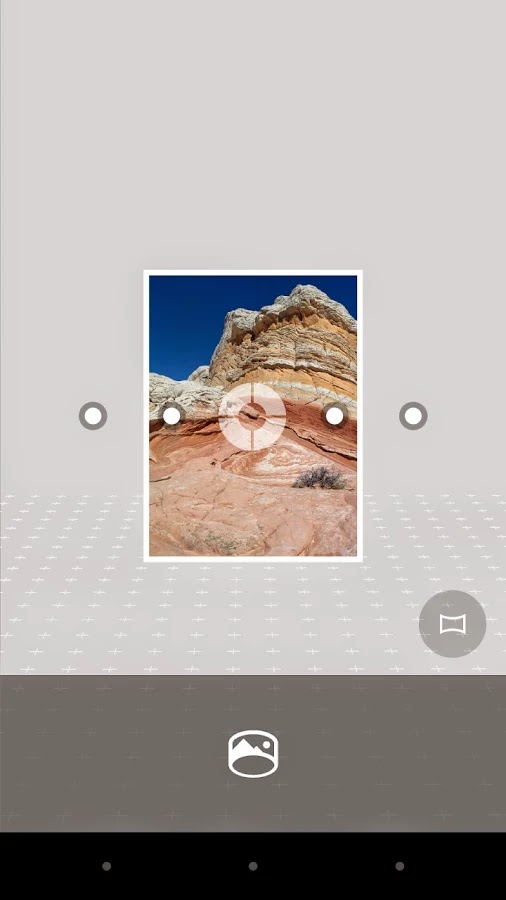
Screenshots :



Check out their Research Blog to learn more (HERE).
Wednesday, 19 March 2014
Wednesday, 19 March 2014
- 0 Comments

Google is now officially getting into wearables. The company has announced Android Wear, a version of the operating system designed specifically for wearable devices like Galaxy gear. To start with, the system is made for smartwatches, and Google is moving aggressively to make itself the key name in wearables.
The company has released two videos that show off what the watch interface will look like, and from what we've seen, it's very impressive. In addition, Motorola and LG have already revealed their first Android Wear smartwatches, which look more attractive than any smartwatches we've seen to date. Motorola's first device is featured in the picture above .
There are several key features that have been announced. Of course, fitness is a key component. Google says that you'll be able to get "real-time speed, distance and time information on your wrist for your run, cycle or walk." Naturally, that means Google Maps will be built in so that you'll be able to get directions directly from your wrist.
The company will also be using Google Now in the watches. Automatic, passive reminders will be sent to users via their smartwatch. The watches will also connect with Android smartphones so that you'll be able to get all the notifications that you want from whatever apps you have installed on your phone.
see this awesome video below :-
Source :- The Verge
Monday, 10 March 2014
Monday, 10 March 2014
- 0 Comments
#10 Nitro Nation BETA
Screenshots :-
.webp)
.webp)
.webp)
.webp)
.webp)
Download Link :-
#9 Fast Outlaw: Asphalt Surfers
Screenshots :-
.webp)
.webp)
.webp)
.webp)
.webp)
.webp)
.webp)

Download Link :-
#8 FORMULA CARTOON ALL-STARS
Screenshots :-
.webp)
.webp)
.webp)
.webp)
.webp)
Download links :-
#7 Muscle Run
Screenshots :-

.webp)
.webp)
.webp)
.webp)
.webp)
.webp)
Download link :-
#6 Blur Overdrive
Screenshots :-
.webp)
.webp)
.webp)
.webp)
.webp)

Download link :-
#5 Traffic Racer
Screenshots :-
.webp)
.webp)
.webp)
.webp)
.webp)
.webp)

Download link :-
#4 GT Racing 2: The Real Car Exp
Screenshots :-
.webp)
.webp)
.webp)
.webp)

Download link :-
#3 Drift Mania: Street Outlaws
Screenshots :-
.webp)
.webp)
.webp)
.webp)
.webp)

Download link :-
#2 Real Racing 3
Screenshots :-
.webp)
.webp)
.webp)
.webp)

Download link :-
#1 Asphalt 8: Airborne
Screenshots :-
.webp)
.webp)
.webp)
.webp)

Download Link :-
Enjoy all these Super Racing games .... on Android ....
Subscribe to:
Posts (Atom)


